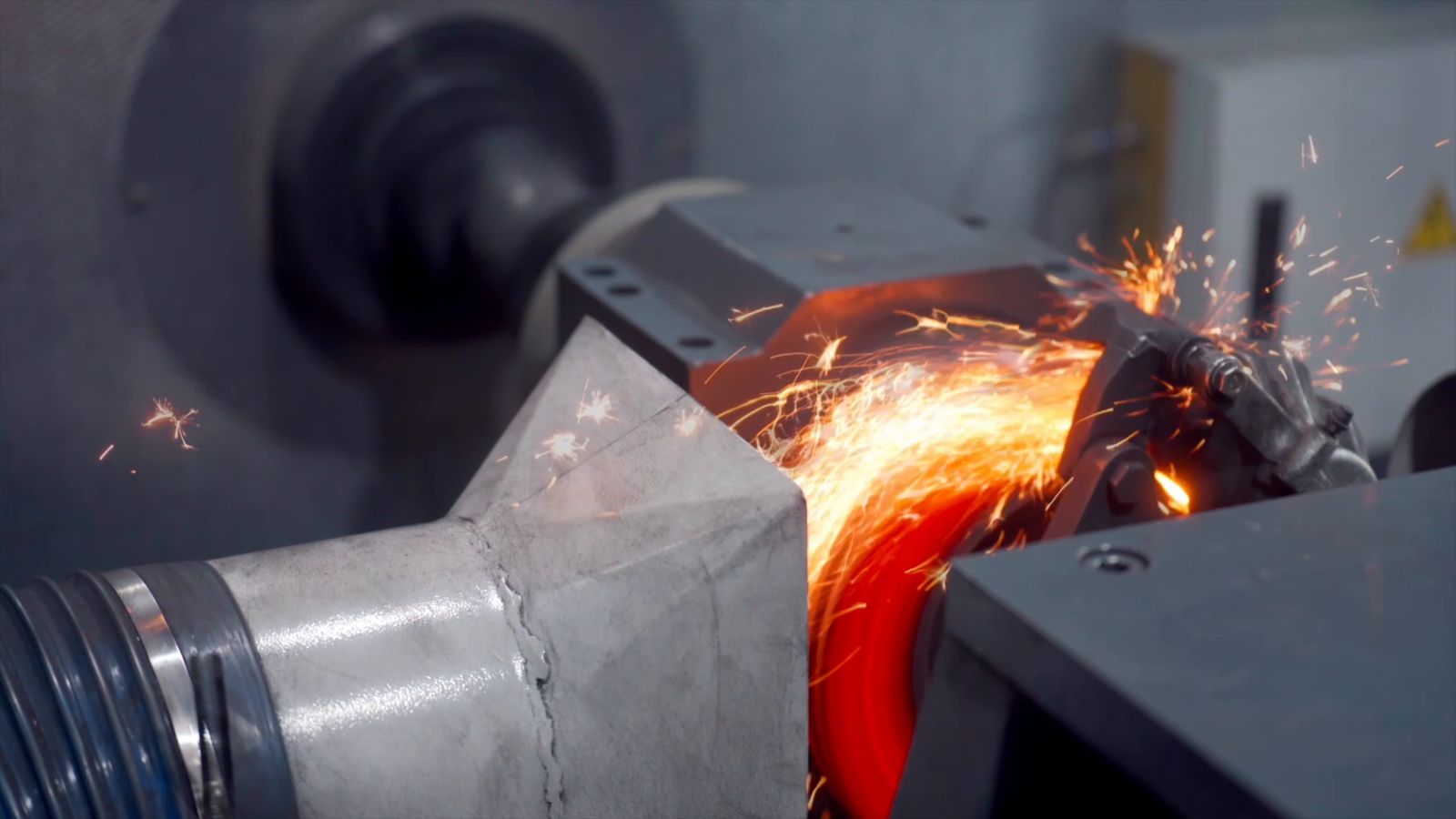
1. The WLTP-Brake Dynamometer Testing Protocol
Unlike tailpipe emissions tested on chassis rollers, Euro 7 brake emissions are measured on enclosed, climate-controlled inertia brake dynamometers.
- ISO Class 7 Clean Enclosure: Constant 20°C temperature and 50% humidity with HEPA background air filtration.
- WLTP-Brake Schedule: 10 operational trips covering 158 km of realistic urban, suburban, and highway decelerations with disc temperatures reaching 350°C.
- Dual Metric Sampling: Gravimetric filter weighing for PM10 mass, combined with condensation particle counters for ultrafine PN10 (>10 nm) aerosols.
2. Friction Engineering for Low-Particle Emissions
Achieving Euro 7 compliance while preserving ECE R90 stopping power (±15% OE baseline) requires three friction matrix innovations.
- Synthetic Mineral Fibers: Replacing aggressive steel wool with synthetic titanates, wollastonite, and spherical graphites.
- High-Thermal Polyimide Binders: Polymer resins resisting thermal sublimation above 450°C, cutting ultrafine particle aerosol shedding by 60%.
- Self-Healing Transfer Film: Shifts the contact zone from abrasive mechanical shearing to gentle adhesive friction, protecting cast iron rotors.
3. Distributor Strategy: Future-Proofing Global Sourcing
European aftermarket regulations are rapidly aligning with Euro 7 requirements, making early adoption a major competitive differentiator.
- Request WLTP-Brake Dyno Test Reports from your manufacturing partners.
- Accelerate the shift toward premium copper-free ceramic formulations for passenger car applications.
- Harmonize inventory across both US NSF Level N (<0.5% copper) and European Euro 7 low-particulate standards.
| Vehicle Category / Powertrain | Euro 7 PM10 Limit | Timeline | Friction Sourcing Requirement |
|---|
| Pure Electric Vehicles (BEVs) | 3 mg/km per vehicle | Mandatory 2026/2027 | Ultra-low particle shedding & anti-rust coatings |
| Hybrid Vehicles (HEV / PHEV) | 5 mg/km per vehicle | Mandatory 2026/2027 | Balanced matrix resisting cold glazing & thermal snubs |
| Internal Combustion (ICE M1) | 7 mg/km (5 mg by 2035) | Mandatory 2026/2027 | Transition from high-dust low-metallic to hybrid ceramic |
| Light Commercial (N1 Vans) | 11 mg/km (7 mg by 2035) | Phased in 2028 | High-durability semi-metallic with particle trap binders |
| Heavy Trucks & Buses (N2/N3) | Tailored cycles | Phased in 2028–2030 | Mechanical lock backing plates with low disc scoring |
Table 3: Euro 7 Brake Particulate Emission (PM10) Limits across Powertrains and Implementation Phases.