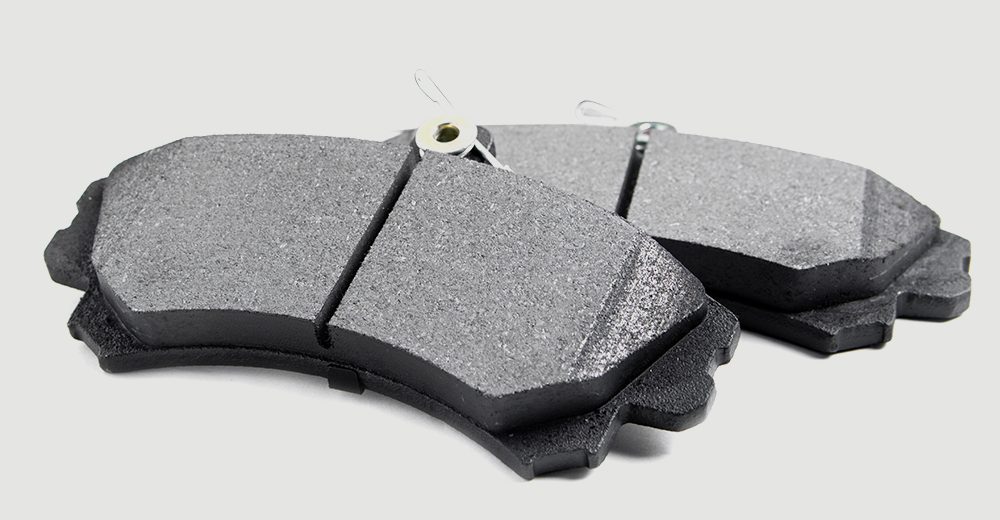
Deep-Dive: When to Stock Ceramic Brake Pads
Ceramic friction materials replace traditional metallic fibers with dense ceramic compounds, aramid fibers (Kevlar), and non-ferrous soft filler metals.
- Zero Wheel Staining: Ceramic brake dust is light-colored and does not adhere electrostatically to alloy wheels, making it the #1 consumer preference in North America and Asian passenger markets.
- Superior Noise Suppression: Operating at acoustic frequencies beyond the human hearing spectrum (>20 kHz), ceramic pads virtually eliminate low-speed brake squeal complaints.
- Extended Pad & Rotor Life: The transfer layer formed on the brake disc is uniform and gentle, reducing warranty returns related to premature rotor grooving.
Deep-Dive: When to Stock Semi-Metallic Brake Pads
Semi-metallic pads utilize between 30% and 65% ferrous metals (steel wool, iron powders) combined with graphite lubricants and synthetic resin binders.
- Outstanding Thermal Dissipation: The high metal matrix acts as a heat sink, rapidly pulling thermal energy away from the friction interface and reducing brake fluid boiling risks.
- Unmatched Fade Resistance: Under sustained heavy braking (such as downhill towing or continuous mountain descents), semi-metallic pads maintain stable friction levels (μ > 0.40).
- Cost Efficiency: Economical raw material costs make semi-metallic pads the top high-volume choice for fleet maintenance and commercial vehicle importers.
Regional Market Preferences & Stocking Strategy
Matching your import catalog to regional driving habits maximizes stock turnover and customer retention across major territories.
- North America (USA & Canada): Over 80% market share for passenger cars demands Ceramic / NAO formulations with Level N (<0.5%) copper-free compliance.
- European Union & UK: High Autobahn cruise speeds require Low-Metallic formulations with instant cold bite and mandatory ECE R90 approval.
- Middle East & Latin America: High ambient temperatures and dusty conditions favor Heavy-Duty Semi-Metallic and heat-stabilized Ceramic compounds.
| Performance Attribute | Premium Ceramic Formulation | Heavy-Duty Semi-Metallic | European Low-Metallic |
|---|
| Friction Coefficient (μ) | 0.35 – 0.42 (Stable & Smooth) | 0.38 – 0.50 (High thermal bite) | 0.38 – 0.45 (Instant response) |
| Max Operating Temp | Up to 650°C (1,200°F) | Up to 750°C (1,380°F) | Up to 700°C (1,300°F) |
| Brake Dust Generation | Ultra-Low (Light colored, non-stick) | Moderate to High (Dark metallic dust) | High (Fine dark dust) |
| NVH / Noise Rating | Whisper-Quiet (<20 kHz acoustic) | Moderate (Requires quality shims) | Prone to cold squeal |
| Rotor Friendliness | Exceptional (Even transfer film) | Moderate to High rotor wear | High initial rotor abrasion |
| Cold Bite Performance | Instant linear response | Requires warm-up under cold temps | Instant aggressive bite |
| Target Regional Markets | North America, Japan, Asia, EV/Sedans | Global Trucks, Fleets, Pickups, SUVs | European OE & High-Speed Highway |
Table 1: Comprehensive Engineering Matrix comparing Ceramic, Semi-Metallic, and European Low-Metallic brake pads.