The Tribological Divide: Why Standard Metallic Pads Destroy Carbon-Ceramic Rotors
Carbon-ceramic brake discs (manufactured from carbon fiber-reinforced silicon carbide composite, C/SiC) possess an extremely hard ceramic surface layer with a Vickers hardness exceeding 2,000 HV—over ten times harder than standard grey cast iron (~180–240 HB). Traditional brake pads formulated for iron rotors rely on hard steel fibers and coarse metallic abrasives to generate friction through mechanical micro-abrasion. When applied to a carbon-ceramic disc, these ferrous particles scratch, pit, and abrade the thin silicon carbide friction layer, inducing thermal micro-cracking and catastrophic surface spalling.
- Core Carbon Fiber Oxidation: When C/SiC rotor core temperatures exceed 600°C in the presence of ambient oxygen, unprotected internal carbon fibers can oxidize into gaseous carbon dioxide (CO2), causing internal mass loss and structural disc failure.
- Sacrificial Boundary Layer: Specialized carbon-ceramic pads continuously lay down a protective micro-thin carbon transfer film that seals the rotor surface and prevents atmospheric oxygen from reaching the hot carbon fibers.
Formulation Chemistry for C/SiC Rotors: Non-Ferrous Reinforcement & Refractory Resins
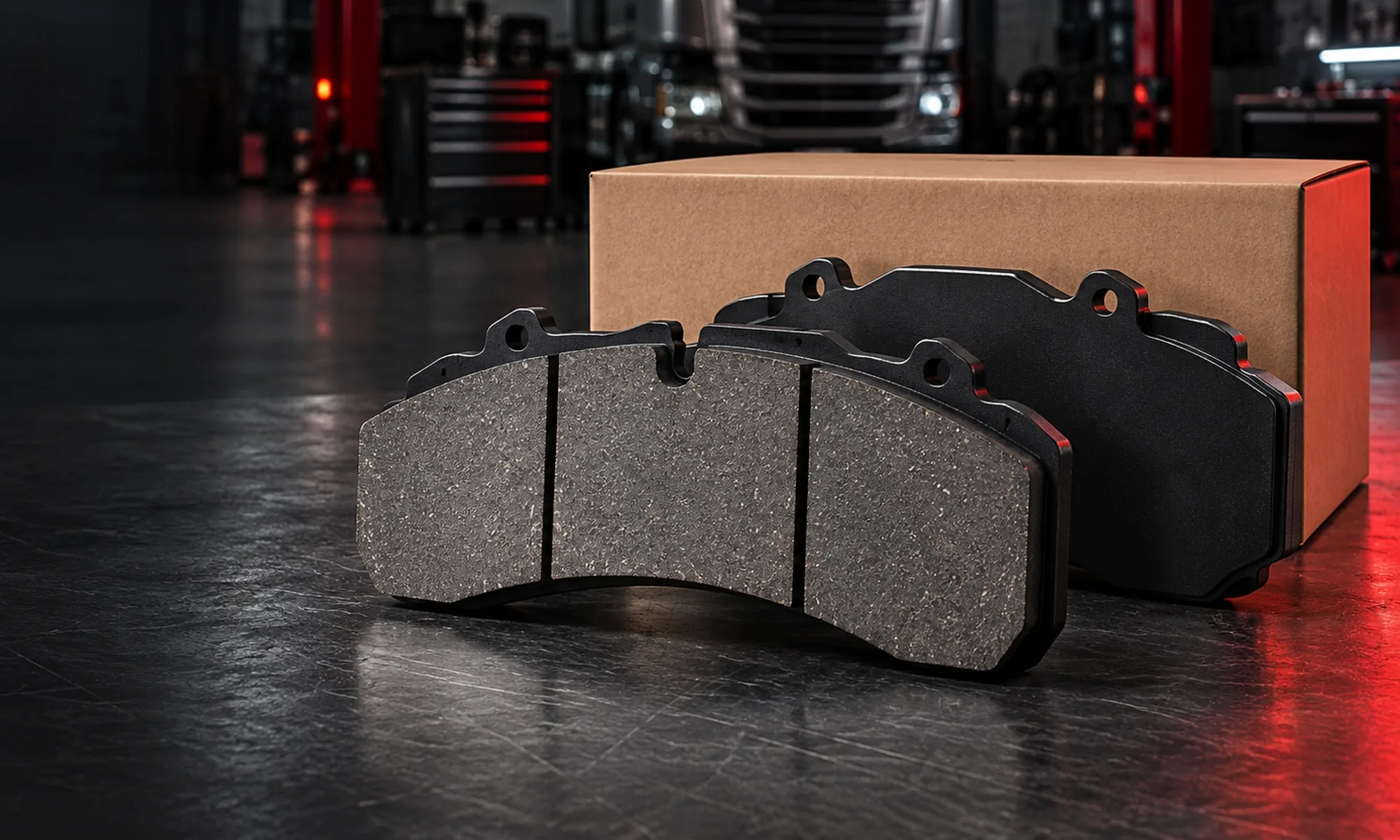
HENGBRAKE carbon-ceramic friction formulations utilize a 100% non-ferrous composite matrix engineered specifically to match the thermal expansion and surface hardness of C/SiC discs. The formulation replaces steel wool with high-purity synthetic graphite, refractory zirconium dioxide (ZrO2), and chopped high-modulus carbon fibers bound by high-temperature siloxane-polyimide resins with a glass transition temperature (Tg) exceeding 350°C.
- Zero Ferrous Content: Eliminates metal-to-ceramic scoring, preventing disc pitting and surface roughness deterioration.
- Titanium Thermal Heat Shields: Incorporates laser-cut titanium alloy backing plate shims that reflect radiant heat away from multi-piston monobloc calipers, keeping brake fluid below its dry boiling point (>320°C).
- NRS Mechanical Retention: Fine-blanked steel backing plates with integral mechanical hooks provide high shear strength (>4.0 N/mm²) under 1.5G+ track deceleration forces.
Performance Compounds: Fast Road vs. Track Day vs. Endurance Racing
High-performance and luxury aftermarket distributors require distinct friction compounds to serve daily supercar drivers versus competitive track enthusiasts. HENGBRAKE categorizes C/SiC compatible friction into three performance tiers:
- Fast Road / Luxury GT (Compound CR-10): Cold bite from 0°C (µ ≈ 0.40), low dust, whisper-quiet NVH, maximum operating ceiling ~650°C. Ideal for Porsche PCCB, Aston Martin, and Bentley street driving.
- Club Track Day (Compound CR-20): Light warm-up required (>100°C), high initial bite (µ ≈ 0.50–0.54), operating ceiling 850°C. Engineered for aggressive track snubs with zero fade.
- Endurance Motorsport (Compound CR-30): High-temperature coefficient (µ ≈ 0.55–0.60), maximum disc preservation under continuous 900°C+ circuit racing.
| Engineering Parameter | Standard Semi-Metallic / Low-Met (Cast Iron Only) | Carbon-Ceramic Specialized Formulation (C/SiC Compatible) | B2B Sourcing & Rotor Safety Impact |
|---|
| Reinforcing Fibers | Steel wool, iron powder, brass chips (High ferrous content) | Chopped PAN/pitch carbon fibers, aramid pulp, ceramic fibers (Non-ferrous) | Ferrous fibers scratch and permanently gouge SiC ceramic surface layers |
| Friction Film Mechanism | Abrasive mechanical iron shearing and iron-oxide transfer | Sacrificial carbon-ceramic dynamic transfer boundary layer | Protects C/SiC rotor matrix from core fiber oxidation at >600°C |
| Thermal Ceiling (°C) | 500°C to 650°C (Severe resin gas fade beyond 650°C) | 850°C to 900°C+ (Refractory ceramic binder matrix) | Maintains high-speed track deceleration torque without pedal fade |
| Friction Coefficient (µ) | 0.38 to 0.44 (Prone to fade under repeated 200+ km/h stops) | 0.48 to 0.55 (Consistent modulation across thermal envelope) | Delivers immediate high-speed initial bite with progressive modulation |
| Rotor Lifespan Impact | Destroys C/SiC disc surface within 1–2 aggressive track sessions | Extends C/SiC disc service life beyond 100,000+ km / multiple track days | Eliminates catastrophic $4,000–$8,000+ per-rotor replacement claims |
Friction Material Compatibility Matrix: Carbon-Ceramic (C/SiC) vs. Grey Cast Iron Rotors