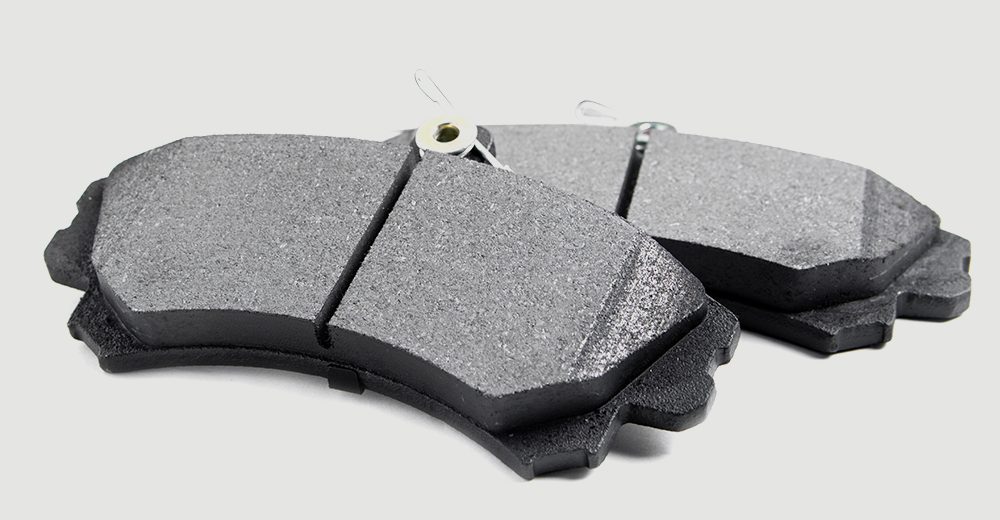
1. The True Physics of Brake Judder: Demystifying Warped Rotors
Cast iron brake discs almost never warp into non-flat shapes under standard driving conditions.
- Stationary Hot Imprints: Clamping hot brake pads at a standstill leaves an uneven, sticky binder resin deposit on the disc track.
- Localized Thermal Hot Spots: As the disc rotates, the raised patch experiences concentrated friction heat exceeding 650°C (1,200°F).
- Cementite Phase Transformation: Localized heat transforms cast iron pearlite into iron carbide (cementite, Fe3C), an ultra-hard abrasive phase that resists wear while surrounding iron erodes, creating permanent DTV.
2. Abrasive Gouging vs. Controlled Transfer Film Friction
Modern friction engineering contrasts harsh mechanical plowing against smooth adherent transfer chemistry.
- The Flaws of Coarse Iron Fibers: Budget semi-metallic pads use jagged steel fibers that mechanically gouge deep grooves into gray cast iron discs.
- Microscopic Transfer Film Chemistry: Advanced ceramic matrices use synthetic titanates and graphites to lay down a protective, self-healing microscopic transfer film.
- Extended Disc Lifespan: Friction occurs directly against the microscopic transfer layer, doubling rotor lifespan and slashing brake dust.
3. Commercial Sourcing Strategy for Aftermarket Distributors
Ensuring strict pad-rotor compatibility delivers massive competitive advantages for private brands.
- Eliminating Warranty Returns: Prevents high-speed pulsation comebacks, which represent a leading driver of installer disputes.
- Bundle Kit Opportunities: Selling paired ceramic pads and disc rotors guarantees optimal transfer layer deposition.
- Verified Dyno Testing: Requiring SAE J2522 (AK Master) disc wear test reports guarantees factory-level rotor friendliness.
| Tribological Parameter | Coarse Abrasive Semi-Metallic | Standard Low-Metallic Formula | Advanced Ceramic Matrix Formula |
|---|
| Primary Friction Mode | Severe Mechanical Abrasion | Hybrid Shear & Adhesion | Smooth Adherent Transfer Film |
| Rotor Wear Rate (μm/stop) | High (1.2 – 2.5 μm/stop) | Moderate (0.6 – 1.1 μm/stop) | Ultra-Low (0.2 – 0.5 μm/stop) |
| Rotor Surface Finish | Grooved / Scored Track | Lightly Matte Finish | Polished / Mirror-Smooth |
| Cementite / DTV Risk | High under severe stop-and-go | Moderate risk | Extremely Low / Negligible |
| Disc Replacement Ratio | 1 disc per 1–2 pad sets | 1 disc per 2–3 pad sets | 1 disc per 3–4 pad sets |
| Ideal Vehicle Applications | Heavy hauling & severe towing | European highway performance | Passenger cars, EVs & Fleet fleets |
Table 8: Tribological Characteristics, Disc Wear Rates, and DTV Judder Risk across Brake Friction Formulations.