Microscopic Tribology: Establishing the Adherent Transfer Film
Brand-new unbedded (green) brake pads contact cast iron rotors on less than 15% true surface area, causing localized pressure spikes (>100 MPa) and flash temperatures (>700°C). Controlled thermal burnishing shears off micro-asperities and deposits a uniform 1–3 µm third-body transfer film of carbonized polymers and solid lubricants. Once established, friction transitions from harsh abrasive metal cutting to smooth adhesive boundary shear, cutting rotor wear rates by up to 60%.
- Adherent Boundary Friction: Stabilizes the nominal friction coefficient (μ ≈ 0.38–0.42) and eliminates early metal-to-metal gouging.
- Acoustic Damping: The microscopic transfer layer dampens high-frequency vibrational excitation at the rotor interface, preventing squeal.
The Catastrophic Failure Mode: Green Pad Thermal Abuse & DTV Judder
When emergency panic stops are performed on unconditioned green pads, volatile binders pyrolyze and boil onto the rotor face. If the vehicle halts with hot pads clamped to the rotor, localized carbon migrates into the cast iron (>723°C eutectoid point), forming glass-hard Cementite (Fe3C) / Martensite islands. The softer surrounding iron wears away while hard cementite spots remain raised, creating Disc Thickness Variation (DTV >15 µm) and violent steering wheel judder.
- Thermal Outline Staining: Stationary clamped hot pads leave indelible carbon footprints that disrupt uniform pad wiping.
- Irreversible Disc Damage: Once cementite transformation occurs, rotors cannot be salvaged by standard skimming and must be replaced.
Factory In-Line Thermal Scorching: Eliminating Break-In Failures
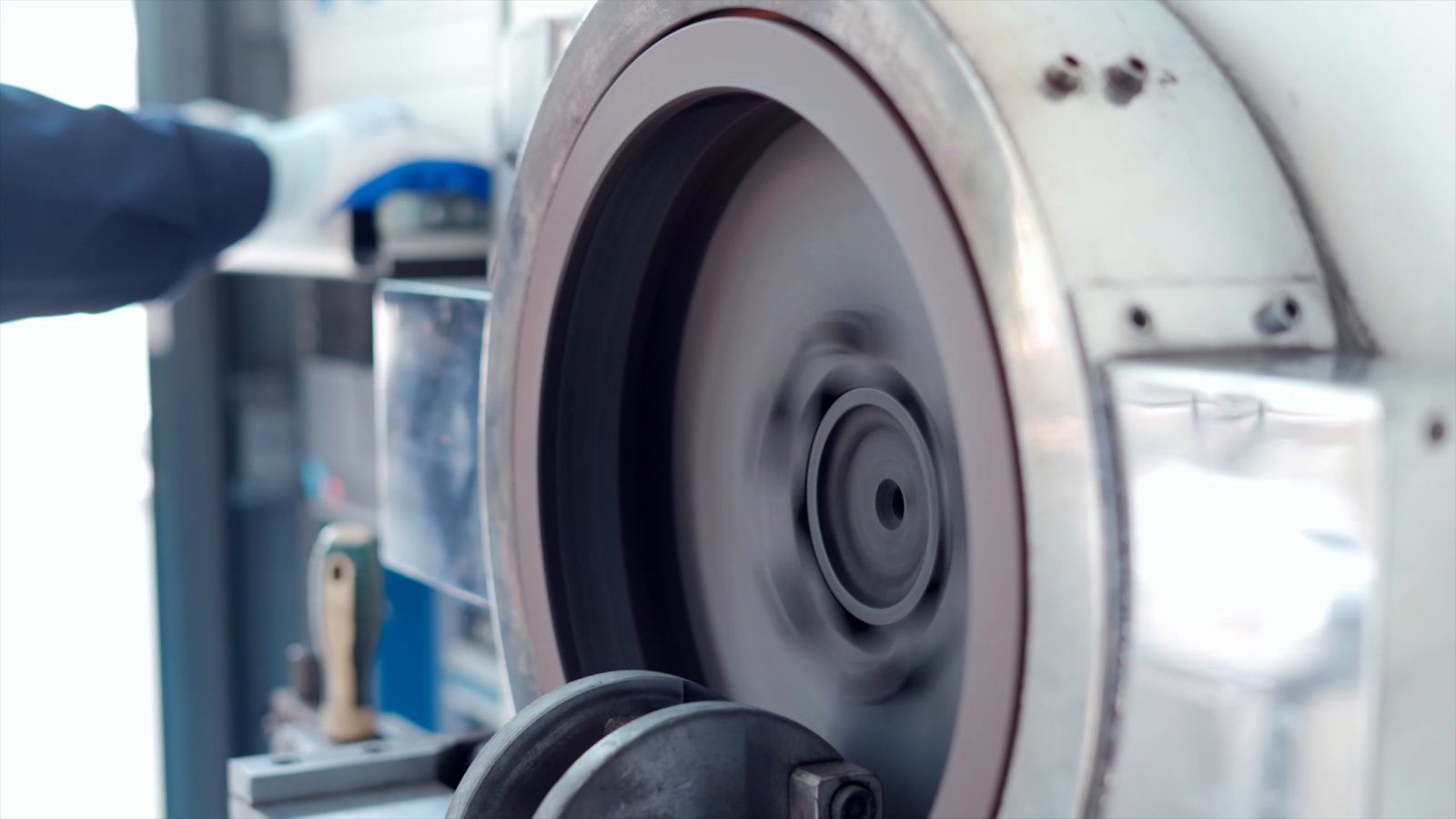
To protect private-label brands from end-user bedding errors, tier-1 manufacturers utilize automated In-Line Thermal Scorching. Exposing the friction puck to 600°C–700°C under 10 bar hydraulic pressure for 30–60 seconds burns off volatile surface resins from the top 1.0–1.5 mm layer, delivering 90%+ nominal stopping power straight out of the box and cutting mechanic squeal comebacks by >85%.
- SAE J2522 AK Master Alignment: Pre-conditioned pads mimic laboratory-burnished friction curves during initial vehicle operation.
- Packaging Best Practice: Providing multi-lingual break-in guide cards inside retail boxes reinforces professional workshop installation.
| Performance Parameter | Standard Unscorched Green Pad | HENGBRAKE In-Line Scorched Pad | Sourcing & Workshop Benefit |
|---|
| Initial Nominal Friction (μ) | Low & unstable (μ ≈ 0.28–0.32) | High & immediate (μ ≈ 0.38–0.42) | Instant safe stopping power straight out of the box |
| Required Workshop Bedding Stops | 30–50 careful road snubs required | Minimal (5–10 normal stops) | Saves technician road-testing labor and bay turnaround time |
| Initial Gas Fade Propensity | High (Volatile organic outgassing >300°C) | Near Zero (Volatile surface resins pre-pyrolyzed) | Eliminates green pad spongy pedal drop on initial highway snubs |
| Rotor Cementite & DTV Risk | Elevated if abused during first 500 km | Extremely Low (Uniform transfer film pre-conditioned) | Eliminates 35%+ of early steering judder warranty comebacks |
| Packaging Requirements | Mandatory strict break-in instruction card | Ready-to-install with standard caution label | Drives higher 5-star customer ratings and repeat distributor orders |
Technical Comparison: Standard Unscorched Green Friction vs. HENGBRAKE Pre-Scorched Friction