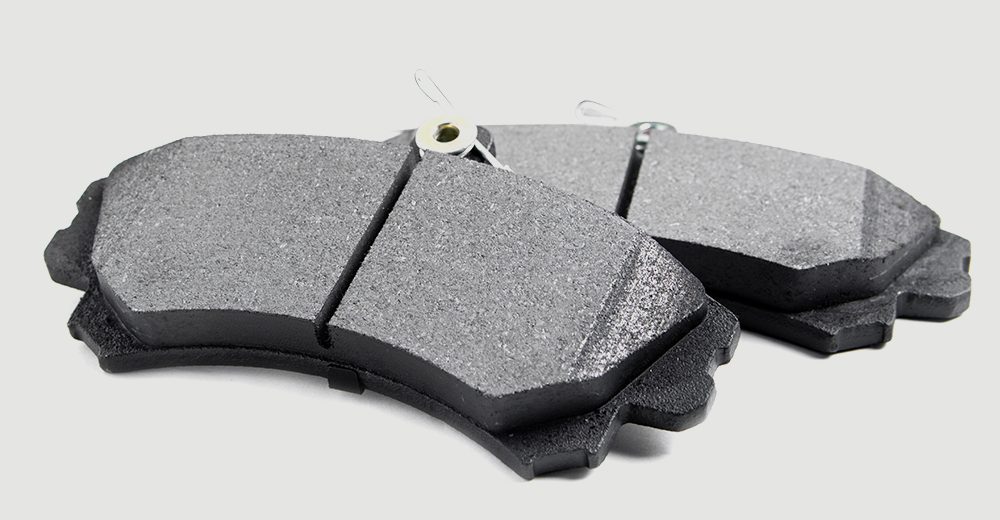
1. What Causes Green Pad Fade? The Outgassing Cushion
Newly molded brake pads retain microscopic uncured volatile phenolic resins on their outer contact surface.
- High Thermal Sublimation: Severe frictional heat vaporizes surface resins into high-pressure gas pockets.
- Hydroplaning Cushion Effect: The gas cushion pushes the friction puck away from the rotor, sharply reducing the coefficient of friction.
- Extended Bedding-in Burden: Drivers must drive 200–300 km cautiously to slowly burn off surface resins without scorching.
2. The In-Line Thermal Scorching Process
Tier-1 OE suppliers pass finished pads through automated infrared scorching tunnels under controlled line speeds.
- High-Intensity Infrared Heating: Rapid surface exposure to 600°C – 700°C for 30 to 60 seconds.
- Controlled 1.0–1.5 mm Thermal Depth: Pyrolyzes volatile binders in the immediate working layer without affecting the substrate.
- Laminar Air Cooling: Stabilizes surface hardness and prevents thermal micro-cracking.
3. Strategic Advantages for Aftermarket Distributors
Specifying factory-scorched brake pads provides significant commercial benefits for private-label brand owners.
- Zero Break-in Comebacks: Mechanics never have to field complaints about spongy initial pedal feel or break-in burning odor.
- Instant Emergency Stopping Power: 100% rated braking bite from the very first meter outside the repair bay.
- Premium Box Branding: Marking packaging with 'Pre-Scorched for Instant Bite' enhances retail value.
| Quality Attribute | Non-Scorched Budget Brake Pads | Factory In-Line Scorched Brake Pads |
|---|
| Initial Stop Performance | Low initial friction (μ < 0.25); prone to green fade | Immediate stable friction (μ ≈ 0.38 - 0.42); zero green fade |
| Bedding-In Distance Required | 200 km – 300 km of cautious driving | Instant out-of-the-box readiness (0 km bedding) |
| Initial Noise / Glazing Risk | High; resin vaporization creates surface glaze & squeal | Low; pre-carbonized surface eliminates sticky resin glaze |
| Rotor Transfer Film Mating | Uneven; initial deposits can cause rotor thickness variation | Fast, uniform microscopic transfer layer on cast iron disc |
| Installer & Mechanic Feedback | Frequent complaints of initial soft pedal and break-in smell | Immediate customer satisfaction and zero break-in comebacks |
| Manufacturing Equipment | Basic grinding only (lower capital expenditure) | Automated computerized IR scorching line (premium standard) |
Table 6: Comparison of Initial Performance, Bedding-In Requirements, and Quality Attributes between Scorched and Non-Scorched Brake Pads.