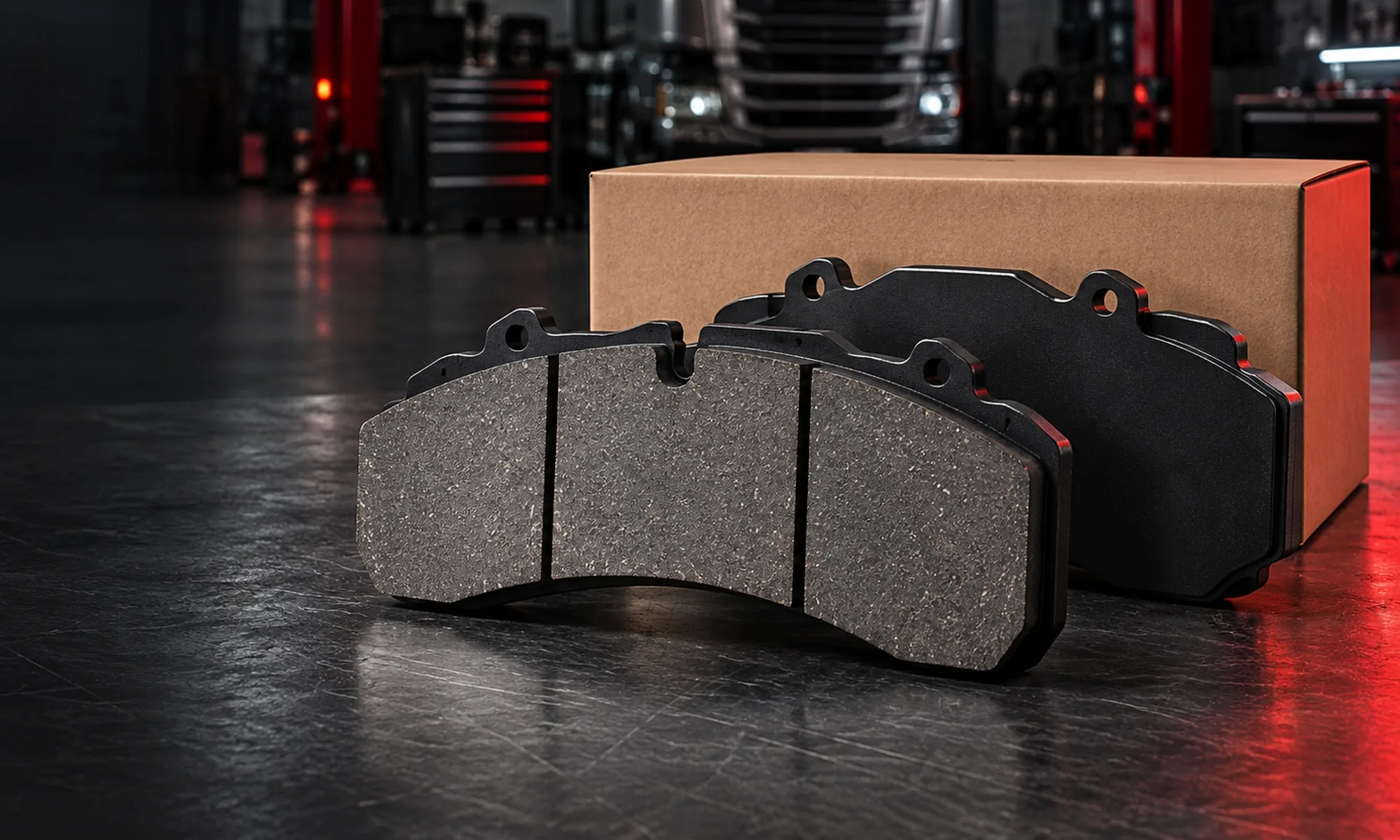
1. Why Brake Pads Delaminate: 3 Root Causes
Traditional chemical phenolic bonding faces critical vulnerabilities under extreme operating temperatures and harsh road environments.
- Thermal Adhesive Degradation: Organic bonding glue chars and oxidizes when rotor temperatures exceed 350°C during heavy mountain descents or towing.
- Rust Jacking (Under-Film Corrosion): Road de-icing salts penetrate the paint edge, oxidizing the steel and forcing the friction block to crack and lift.
- Excessive Shear Dynamic Shock: Emergency panic stops exert extreme tangential forces that can shear un-anchored friction pucks off flat backplates.
2. How Mechanical Retention Works: Zero-Adhesive Mechanical Lock
During precision backing plate blanking, specialized tooling raises hundreds of multidirectional steel hooks directly out of the virgin steel.
- Positive Compression Molding: High-tonnage hot pressing forces friction compound around and under the steel hooks.
- 100% Thermal Immunity: Because physical steel hooks cannot melt or burn at braking temperatures, shear integrity is preserved for the entire pad life.
- Prevention of Edge Lift: Mechanical anchors along the outer perimeter physically lock the edges, blocking moisture ingress.
3. ISO 6312 & ECE R90 Destructive Shear Testing Standards
Brake pad shear strength is validated on calibrated hydraulic test fixtures measuring load capacity until failure.
- ECE R90 Acceptance Standard: Requires a minimum shear strength of τ ≥ 2.5 N/mm² for passenger cars and > 3.5 N/mm² for heavy commercial vehicles.
- Cohesive Fracture Mode: Full pass certification requires 100% cohesive fracture within the friction compound, leaving no bare steel exposed.
| Engineering Feature | Traditional Chemical Adhesive | Mechanical Retention System (MRS) |
|---|
| Primary Retention Mechanism | Phenolic adhesive glue layer | Multidirectional integral steel hooks & mechanical interlock |
| Thermal Shear Resistance | Degrades above 350°C – 400°C | Thermally immune up to the melting point of steel (>1,000°C) |
| Rust Jacking / Edge Lift Risk | High; moisture easily creeps along the glue line | Zero; mechanical hooks prevent moisture propagation |
| ISO 6312 Shear Test Result | Often fails at the steel interface (Adhesive Failure) | 100% Cohesive failure within friction material |
| End-of-Life Wear Safety | Risk of pad crumbling when worn thin | Retains structural cohesion down to backing plate |
| Ideal Vehicle Applications | Light passenger cars with normal city commuting | Commercial trucks, buses, heavy fleets, EVs, and towing SUVs |
Table 5: Structural & Performance Comparison between Chemical Adhesive Bonding and Mechanical Retention Systems (MRS).